


- University
- Academic
- Schools/Vocational Schools
- Vocational School of Justice
- Vocational School
- Vocational School
- Department of Banking and Insurance (Turkish)
- Department of Computer Programming (Turkish)
- Department of Foreign Trade (Turkish)
- Department of Graphic Design (Turkish)
- Department of Interior Design (Turkish)
- Department of Construction Technology (Turkish)
- Department of Occupational Health and Safety (Turkish)
- Department of Media and Communication (Turkish)
- Department of Architectural Restoration (Turkish)
- Department of Radio and Tv Programming (Turkish)
- Department of Civil Aviation Cabin Services (Turkish)
- Department of Civil Aviation Transportation Management (Turkish)
- Department of Tourism and Hotel Management (Turkish)
- Department of Applied English Translation
- Vocational School Of Health Services
- Vocational School Of Health Services
- Department of Child Development (Turkish)
- Department of Physiotherapy (Turkish)
- Department of Paramedic (Turkish)
- Department of Opticianry (Turkish)
- Department of Medical Documentation and Secreteriat (Turkish)
- Department of Medical Imaging Techniques (Turkish)
- Department of Medical Laboratory Techniques (Turkish)
- Department of Elderly Care (Turkish)
- School of Applied Management Sciences
- School of Foreign Languages
- Faculties
- Faculty of Arts and Sciences
- Faculty of Fine Arts and Design
- Faculty of Law
- Faculty of Communication
- Faculty of Business
- Faculty of Engineering
- Faculty of Engineering
- Department of Computer Engineering
- Department of Biomedical Engineering
- Department of Electrical and Electronics Engineering
- Department of Industrial Engineering
- Department of Food Engineering
- Department of Genetics and Bioengineering
- Department of Aerospace Engineering
- Department of Civil Engineering
- Department of Mechanical Engineering
- Department of Mechatronics Engineering
- Department of Software Engineering
- Faculty of Health Sciences
- Medicine
- Graduate School
- Common Courses
- Schools/Vocational Schools
- Research
- Research Centers
- Library
- Smart Campus
- Technology Transfer Office
- İzmir Sciencepark
- Continuous Education Center (EKOSEM)
- Children's University
- Ethics Committee
- Teaching and Learning Center (EKOEĞİTİM)
- Psychology Application and Research Center
- Researcher Training Coordinatorship
- Research Collaborations And Innovation Coordinatorship
- Campus
- INTERNATIONAL
- Contact
- 25TH YEAR
Department of Cinema and Digital Media
GEAR 206 | Course Introduction and Application Information
| Course Name |
Eras and Composers in Music
|
|
Code
|
Semester
|
Theory
(hour/week) |
Application/Lab
(hour/week) |
Local Credits
|
ECTS
|
|
GEAR 206
|
Fall/Spring
|
3
|
0
|
3
|
6
|
| Prerequisites |
None
|
|||||
| Course Language |
English
|
|||||
| Course Type |
Service Course
|
|||||
| Course Level |
First Cycle
|
|||||
| Mode of Delivery | - | |||||
| Teaching Methods and Techniques of the Course | DiscussionQ&ALecture / Presentation | |||||
| National Occupation Classification | - | |||||
| Course Coordinator | ||||||
| Course Lecturer(s) | ||||||
| Assistant(s) | - | |||||
| Course Objectives | The objective of this course is to research the examples of composers’ works and eras. The course will provide general information about instruments and composition styles of the classical music. |
| Learning Outcomes |
The students who succeeded in this course;
|
| Course Description | In this course, basic information about the history of classical music will be given with examples of periods, composers and works. Students will learn the differences between periods in music through composers, their works and historical events, and will have information about the historical development of the orchestra. They will be encouraged to attend classical music concerts and have information about the contemporary classical music world, while learning about the stories of the composition of major works and the importance of composers in the period. |
| Related Sustainable Development Goals |
|
|
|
Core Courses | |
| Major Area Courses | ||
| Supportive Courses | ||
| Media and Management Skills Courses | ||
| Transferable Skill Courses |
WEEKLY SUBJECTS AND RELATED PREPARATION STUDIES
| Week | Subjects | Related Preparation |
| 1 | Orientation and introduction to the course Baroque Era | Sadie, Stanley Grove Music Dictionary, Apel W.,Harvard Dictionary of Music, E.L. Voynich, Chopin’s Letters, Samson J., Music of Chopin |
| 2 | Classical Period: J. Haydn, W.A. Mozart, L. v. Beethoven | Sadie, Stanley Grove Music Dictionary, Apel W.,Harvard Dictionary of Music, Rosenblum, Sandra Performance Practices in Classic Piano Music Todd. L. Mendelssohn, Brian Newbould, Schubert: The Music and The Man |
| 3 | Romantic Period: F. Schubert, F. Mendelssohn, H. Berlioz | Sadie, Stanley Grove Music Dictionary, Apel W.,Harvard Dictionary of Music, E.L. Voynich, Chopin’s Letters, Samson J., Music of Chopin |
| 4 | Romantic Period: N. Paganini, F. Liszt, F. Chopin, R. Wagner | Sadie, Stanley Grove Music Dictionary, Apel W.,Harvard Dictionary of Music, E.L. Voynich, Chopin’s Letters, Samson J., Music of Chopin |
| 5 | Quiz Romantic Period: R. Schumann, C. Schumann, J. Brahms | Sadie, Stanley Grove Music Dictionary, Apel W.,Harvard Dictionary of Music, Wilhelm Joseph von Wasielewski The Life of Schumann |
| 6 | Romantic Period: Tchaikovsky, Ballets of Tchaikovsky | Sadie, Stanley Grove Music Dictionary,Kalbeck Max Johannes Brahms; Frisch W., Brahms and His World Ed., Bottstein L, The Compleat Brahms |
| 7 | Nationalist Composers: M. Glinka, B. Smetana, A. Dvorak, E. Grieg | Sadie, Stanley Grove Music Dictionary, Apel W.,Harvard Dictionary of Music, Smetana, Dvorak, Grieg works recordings |
| 8 | Midterm | |
| 9 | Russian Romantic Composers | Sadie, Stanley Grove Music Dictionary, Apel W.,Harvard Dictionary of Music, Tchaikovsky, Rachmaninoff, Borodin, Rimsky-Korsakov,Schostakovitch |
| 10 | Romantic Period Opera Composers | Sadie, Stanley Grove Music Dictionary, Apel W.,Harvard Dictionary of Music, Tchaikovsky, Rachmaninoff, Borodin, Rimsky-Korsakov, Schostakovitch |
| 11 | Rachmaninoff- Piano Concerto No.2 Op.18, Prelude in C Sharp Minor Prokofiev- Dance of the Knights, Romeo and Juliet, Satie- Gnosienne 1, Gymnopedie 1, Morceau en Forme de Poire, Vexations, Parade | Sadie, S.,”Grove Music Dictionary”, Apel W.,Harvard Dictionary of Music J. Cage, Satie, Ravel recordings, Satie presentations,Rachmaninoff and Prokofiev recordings |
| 12 | Impressionism | Sadie, Stanley Grove Music Dictionary, Debussy, Ravel Recordings |
| 13 | Turkish Composers | İLYASOĞLU Evin;71 Türk Bestecisi / 71 Turkish Composers |
| 14 | Humor and Music | Personal Archive&Records |
| 15 | Final Review | |
| 16 | Final Exam |
| Course Notes/Textbooks | Dorling KINDERSLEY, The Complete Classical Music Guide. DK Publishing (Dorling Kindersley), 2012. - ISBN: 9781409383161 |
| Suggested Readings/Materials | Stanley SADIE, Grove Dictionary of Music and Musicians. Oxford University Press, 2001. - ISBN: 9780195170672 Willi APEL, Harvard Music Dictionary. Harvard University Press, 1969. - ISBN: 9780674375017 Ed. W. FRISCH, Brahms and His World Princeton University Press. 1990. - ISBN: 9781400833627 Jan SWAFFORD, Johannes Brahms: A Biography. Random House USA Inc., 2003. - ISBN: 9780679422617 E.L. VOYNICH, Chopin’s Letters. Dover Publications, 1988. - ISBN: 9780486255644 Jim SAMSON, Music of Chopin. Clarendon Press, 1994. - ISBN: 9780198164029 Brian NEWBOULD, Schubert: The Music and The Man. University of California Press, 1999. - ISBN: 9780520219571 Wilhelm Joseph von WASIELEWSKI, The Life of Schumann. Blumenfeld Press,2011. - ISBN: 9781446057056 Evin İLYASOGLU, 71 Turkish Composers. Pan, 2007. - ISBN: 9789944396257
|
EVALUATION SYSTEM
| Semester Activities | Number | Weigthing |
| Participation |
1
|
15
|
| Laboratory / Application | ||
| Field Work | ||
| Quizzes / Studio Critiques | ||
| Portfolio | ||
| Homework / Assignments |
1
|
20
|
| Presentation / Jury | ||
| Project | ||
| Seminar / Workshop | ||
| Oral Exams | ||
| Midterm |
1
|
25
|
| Final Exam |
1
|
40
|
| Total |
| Weighting of Semester Activities on the Final Grade |
3
|
60
|
| Weighting of End-of-Semester Activities on the Final Grade |
1
|
40
|
| Total |
ECTS / WORKLOAD TABLE
| Semester Activities | Number | Duration (Hours) | Workload |
|---|---|---|---|
| Theoretical Course Hours (Including exam week: 16 x total hours) |
16
|
3
|
48
|
| Laboratory / Application Hours |
16
|
0
|
|
| Study Hours Out of Class |
16
|
3
|
48
|
| Field Work |
0
|
||
| Quizzes / Studio Critiques |
0
|
||
| Portfolio |
0
|
||
| Homework / Assignments |
2
|
8
|
16
|
| Presentation / Jury |
0
|
||
| Project |
0
|
||
| Seminar / Workshop |
0
|
||
| Oral Exam |
0
|
||
| Midterms |
1
|
3
|
3
|
| Final Exam |
1
|
4
|
4
|
| Total |
119
|
COURSE LEARNING OUTCOMES AND PROGRAM QUALIFICATIONS RELATIONSHIP
|
#
|
Program Competencies/Outcomes |
* Contribution Level
|
|||||
|
1
|
2
|
3
|
4
|
5
|
|||
| 1 |
To be able to have fundamental knowledge about narrative forms in cinema, digital and interactive media, and the foundational concepts relevant to these forms. |
-
|
-
|
-
|
-
|
-
|
|
| 2 |
To be able to create narratives based on creative and critical thinking skills, by using the forms and tools of expression specific to cinema and digital media arts. |
-
|
-
|
-
|
-
|
-
|
|
| 3 |
To be able to use the technical equipment and software required for becoming a specialist/expert in cinema and digital media. |
-
|
-
|
-
|
-
|
-
|
|
| 4 |
To be able to perform skills such as scriptwriting, production planning, use of the camera, sound recording, lighting and editing, at the basic level necessary for pre-production, production and post-production phases of an audio-visual work; and to perform at least one of them at an advanced level. |
-
|
-
|
-
|
-
|
-
|
|
| 5 |
To be able to discuss how meaning is made in cinema and digital media; how economy, politics and culture affect regimes of representation; and how processes of production, consumption, distribution and meaning-making shape narratives. |
-
|
-
|
-
|
-
|
-
|
|
| 6 |
To be able to perform the special technical and aesthetic skills at the basic level necessary to create digital media narratives in the fields of interactive film, video installation, experimental cinema and virtual reality. |
-
|
-
|
-
|
-
|
-
|
|
| 7 |
To be able to critically analyze a film or digital media artwork from technical, intellectual and artistic perspectives. |
-
|
-
|
-
|
-
|
-
|
|
| 8 |
To be able to participate in the production of a film or digital media artwork as a member or leader of a team, following the principles of work safety and norms of ethical behavior. |
-
|
-
|
-
|
-
|
-
|
|
| 9 |
To be able to stay informed about global scientific, social, economic, cultural, political, institutional and industrial developments. |
-
|
-
|
-
|
-
|
-
|
|
| 10 |
To be able to develop solutions to legal, scientific and professional problems surrounding the field of cinema and digital media. |
-
|
-
|
-
|
-
|
-
|
|
| 11 |
To be able to use a foreign language to communicate with colleagues and collect data in the field of cinema and digital media. ("European Language Portfolio Global Scale", Level B1). |
-
|
-
|
-
|
-
|
-
|
|
| 12 |
To be able to use a second foreign language at the medium level. |
-
|
-
|
-
|
-
|
-
|
|
| 13 |
To be able to connect the knowledge accumulated throughout human history to the field of expertise. |
-
|
-
|
-
|
-
|
-
|
|
*1 Lowest, 2 Low, 3 Average, 4 High, 5 Highest


NEWSALL NEWS


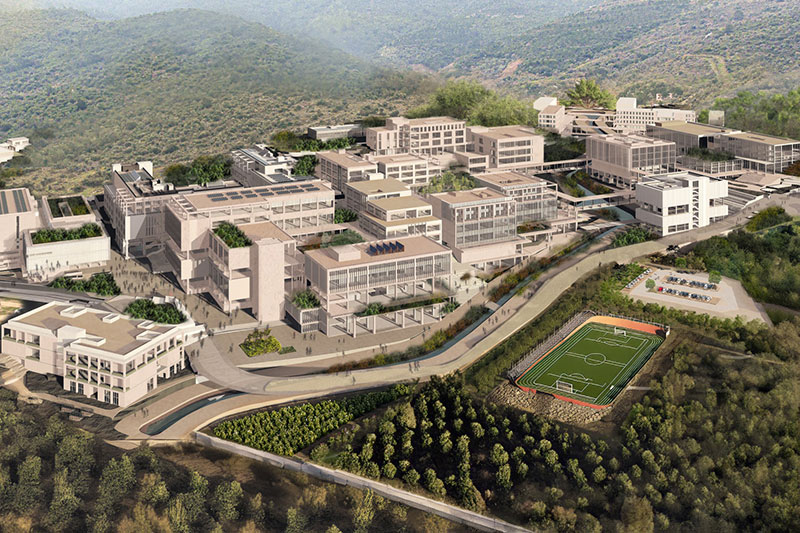
IZMIR UNIVERSITY OF ECONOMICS GÜZELBAHÇE CAMPUS
DetailsGLOBAL CAREER
As Izmir University of Economics transforms into a world-class university, it also raises successful young people with global competence.
More..CONTRIBUTION TO SCIENCE
Izmir University of Economics produces qualified knowledge and competent technologies.
More..VALUING PEOPLE
Izmir University of Economics sees producing social benefit as its reason for existence.
More..
You are one step ahead with your graduate education at Izmir University of Economics.