

- University
- Academic
- Schools/Vocational Schools
- Vocational School of Justice
- Vocational School
- Vocational School
- Department of Banking and Insurance (Turkish)
- Department of Computer Programming (Turkish)
- Department of Foreign Trade (Turkish)
- Department of Graphic Design (Turkish)
- Department of Interior Design (Turkish)
- Department of Construction Technology (Turkish)
- Department of Occupational Health and Safety (Turkish)
- Department of Media and Communication (Turkish)
- Department of Architectural Restoration (Turkish)
- Department of Radio and Tv Programming (Turkish)
- Department of Civil Aviation Cabin Services (Turkish)
- Department of Civil Aviation Transportation Management (Turkish)
- Department of Tourism and Hotel Management (Turkish)
- Department of Applied English Translation
- Vocational School Of Health Services
- Vocational School Of Health Services
- Department of Child Development (Turkish)
- Department of Physiotherapy (Turkish)
- Department of Paramedic (Turkish)
- Department of Opticianry (Turkish)
- Department of Medical Documentation and Secreteriat (Turkish)
- Department of Medical Imaging Techniques (Turkish)
- Department of Medical Laboratory Techniques (Turkish)
- Department of Elderly Care (Turkish)
- School of Applied Management Sciences
- School of Foreign Languages
- Faculties
- Faculty of Arts and Sciences
- Faculty of Fine Arts and Design
- Faculty of Law
- Faculty of Communication
- Faculty of Business
- Faculty of Engineering
- Faculty of Engineering
- Department of Computer Engineering
- Department of Biomedical Engineering
- Department of Electrical and Electronics Engineering
- Department of Industrial Engineering
- Department of Food Engineering
- Department of Genetics and Bioengineering
- Department of Aerospace Engineering
- Department of Civil Engineering
- Department of Mechanical Engineering
- Department of Mechatronics Engineering
- Department of Software Engineering
- Faculty of Health Sciences
- Medicine
- Graduate School
- Common Courses
- Schools/Vocational Schools
- Research
- Research Centers
- Library
- Smart Campus
- Technology Transfer Office
- İzmir Sciencepark
- Continuous Education Center (EKOSEM)
- Children's University
- Ethics Committee
- Teaching and Learning Center (EKOEĞİTİM)
- Psychology Application and Research Center
- Researcher Training Coordinatorship
- Research Collaborations And Innovation Coordinatorship
- Campus
- INTERNATIONAL
- Contact
- 25TH YEAR
Department of Cinema and Digital Media
CDM 337 | Course Introduction and Application Information
| Course Name |
Transmedia Storytelling
|
|
Code
|
Semester
|
Theory
(hour/week) |
Application/Lab
(hour/week) |
Local Credits
|
ECTS
|
|
CDM 337
|
Fall/Spring
|
3
|
0
|
3
|
5
|
| Prerequisites |
|
|||||||
| Course Language |
English
|
|||||||
| Course Type |
Elective
|
|||||||
| Course Level |
First Cycle
|
|||||||
| Mode of Delivery | face to face | |||||||
| Teaching Methods and Techniques of the Course | DiscussionQ&ALecture / Presentation | |||||||
| National Occupation Classification | - | |||||||
| Course Coordinator | - | |||||||
| Course Lecturer(s) | ||||||||
| Assistant(s) | - | |||||||
| Course Objectives | The objective of the course is to teach students transmedia storytelling and message-conveying methods. Students begin the course by learning the history of this technique, then progress through examples to develop their own transmedia projects. |
| Learning Outcomes |
The students who succeeded in this course;
|
| Course Description | This course combines cinema and media theories to teach students transmedia storytelling techniques. As these techniques are explained through examples, the socio-cultural and aesthetic contexts of each example project are also examined. As an assignment, while developing their own transmedia storytelling projects, students are guided to develop ideas through the fields of cinema, new media, and internet culture. In these assignments, students present their own idea-based projects. |
| Related Sustainable Development Goals |
|
|
|
Core Courses | |
| Major Area Courses | ||
| Supportive Courses |
X
|
|
| Media and Management Skills Courses | ||
| Transferable Skill Courses |
WEEKLY SUBJECTS AND RELATED PREPARATION STUDIES
| Week | Subjects | Related Preparation |
| 1 | Introduction to the course | |
| 2 | Transmedia Storytelling and Its Origins | |
| 3 | Assignment I: Research Presentations / Current Transmedia Examples / Principles of Transmedia Storytelling | Henry Jenkins: If It Doesn’t Spread, It’s Dead / Assignment I: Transmedia Examples |
| 4 | Cinema and Transmedia | |
| 5 | Video Games and Transmedia | |
| 6 | Activist Transmedia Examples | |
| 7 | Assignment II: Project Presentations | Assignment II: Turning an existing film into a transmedia project |
| 8 | Transmedia Promotion in Consumer Culture | |
| 9 | Fan Culture, Fan Fiction, and Transmedia / Assignment III: Project Presentations | Assignment III: Expanding the story of an existing fictional character |
| 10 | Transmedia Examples in Horror Cinema | |
| 11 | The City as a Storytelling Platform | |
| 12 | Mockumentary and Alternate Reality Games | |
| 13 | Influencer Culture and Aesthetics | |
| 14 | Assignment IV: Pitching | Assignment IV: Students pitching and presenting their own transmedia projects |
| 15 | Evaluation and feedback | |
| 16 | Course review |
| Course Notes/Textbooks | |
| Suggested Readings/Materials | Robert Fulford – The Triumph of Narrative: Storytelling in the Age of Mass Culture Girish Shambu – The New Cinephilia Shane Denson & Julia Leyda – Post-Cinema: Theorizing 21st-Century Film Emre Ahmet Seçmen – Neo-sinema Eva Selin – Transmedya Kültürü Yunus Emre Ökmen – Gelenekselden Dijitale Hikaye Anlatıcılığı |
EVALUATION SYSTEM
| Semester Activities | Number | Weigthing |
| Participation |
1
|
20
|
| Laboratory / Application | ||
| Field Work | ||
| Quizzes / Studio Critiques | ||
| Portfolio | ||
| Homework / Assignments |
1
|
80
|
| Presentation / Jury |
1
|
|
| Project | ||
| Seminar / Workshop | ||
| Oral Exams | ||
| Midterm | ||
| Final Exam | ||
| Total |
| Weighting of Semester Activities on the Final Grade |
3
|
100
|
| Weighting of End-of-Semester Activities on the Final Grade | ||
| Total |
ECTS / WORKLOAD TABLE
| Semester Activities | Number | Duration (Hours) | Workload |
|---|---|---|---|
| Theoretical Course Hours (Including exam week: 16 x total hours) |
16
|
3
|
48
|
| Laboratory / Application Hours |
16
|
0
|
|
| Study Hours Out of Class |
14
|
4
|
56
|
| Field Work |
0
|
||
| Quizzes / Studio Critiques |
0
|
||
| Portfolio |
0
|
||
| Homework / Assignments |
4
|
10
|
40
|
| Presentation / Jury |
1
|
6
|
6
|
| Project |
0
|
||
| Seminar / Workshop |
0
|
||
| Oral Exam |
0
|
||
| Midterms |
0
|
||
| Final Exam |
0
|
||
| Total |
150
|
COURSE LEARNING OUTCOMES AND PROGRAM QUALIFICATIONS RELATIONSHIP
|
#
|
Program Competencies/Outcomes |
* Contribution Level
|
|||||
|
1
|
2
|
3
|
4
|
5
|
|||
| 1 |
To be able to have fundamental knowledge about narrative forms in cinema, digital and interactive media, and the foundational concepts relevant to these forms. |
-
|
-
|
X
|
-
|
-
|
|
| 2 |
To be able to create narratives based on creative and critical thinking skills, by using the forms and tools of expression specific to cinema and digital media arts. |
-
|
-
|
X
|
-
|
-
|
|
| 3 |
To be able to use the technical equipment and software required for becoming a specialist/expert in cinema and digital media. |
-
|
-
|
-
|
-
|
-
|
|
| 4 |
To be able to perform skills such as scriptwriting, production planning, use of the camera, sound recording, lighting and editing, at the basic level necessary for pre-production, production and post-production phases of an audio-visual work; and to perform at least one of them at an advanced level. |
-
|
-
|
-
|
-
|
-
|
|
| 5 |
To be able to discuss how meaning is made in cinema and digital media; how economy, politics and culture affect regimes of representation; and how processes of production, consumption, distribution and meaning-making shape narratives. |
-
|
X
|
-
|
-
|
-
|
|
| 6 |
To be able to perform the special technical and aesthetic skills at the basic level necessary to create digital media narratives in the fields of interactive film, video installation, experimental cinema and virtual reality. |
-
|
-
|
-
|
-
|
-
|
|
| 7 |
To be able to critically analyze a film or digital media artwork from technical, intellectual and artistic perspectives. |
-
|
-
|
-
|
-
|
-
|
|
| 8 |
To be able to participate in the production of a film or digital media artwork as a member or leader of a team, following the principles of work safety and norms of ethical behavior. |
-
|
-
|
-
|
-
|
-
|
|
| 9 |
To be able to stay informed about global scientific, social, economic, cultural, political, institutional and industrial developments. |
-
|
-
|
-
|
-
|
-
|
|
| 10 |
To be able to develop solutions to legal, scientific and professional problems surrounding the field of cinema and digital media. |
-
|
-
|
-
|
-
|
-
|
|
| 11 |
To be able to use a foreign language to communicate with colleagues and collect data in the field of cinema and digital media. ("European Language Portfolio Global Scale", Level B1). |
-
|
-
|
-
|
-
|
-
|
|
| 12 |
To be able to use a second foreign language at the medium level. |
-
|
-
|
-
|
-
|
-
|
|
| 13 |
To be able to connect the knowledge accumulated throughout human history to the field of expertise. |
-
|
-
|
-
|
X
|
-
|
|
*1 Lowest, 2 Low, 3 Average, 4 High, 5 Highest


NEWSALL NEWS


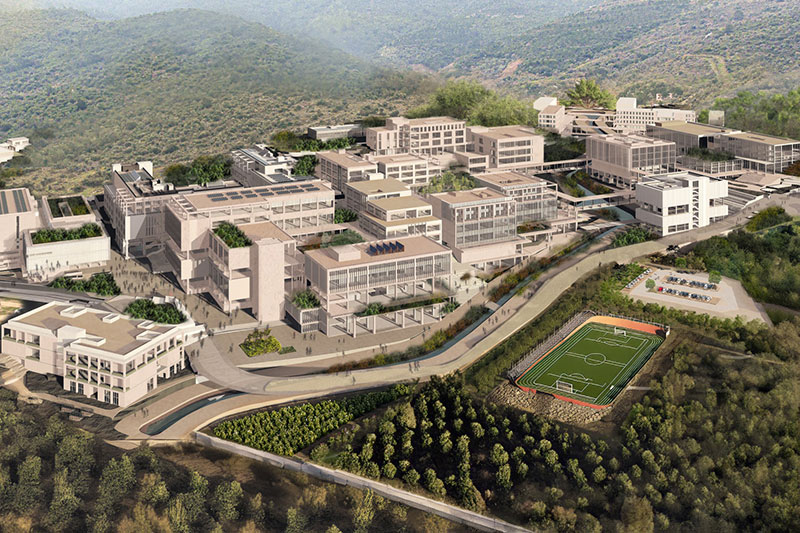
IZMIR UNIVERSITY OF ECONOMICS GÜZELBAHÇE CAMPUS
DetailsGLOBAL CAREER
As Izmir University of Economics transforms into a world-class university, it also raises successful young people with global competence.
More..CONTRIBUTION TO SCIENCE
Izmir University of Economics produces qualified knowledge and competent technologies.
More..VALUING PEOPLE
Izmir University of Economics sees producing social benefit as its reason for existence.
More..
You are one step ahead with your graduate education at Izmir University of Economics.