

- University
- Academic
- Schools/Vocational Schools
- Vocational School of Justice
- Vocational School
- Vocational School
- Department of Banking and Insurance (Turkish)
- Department of Computer Programming (Turkish)
- Department of Foreign Trade (Turkish)
- Department of Graphic Design (Turkish)
- Department of Interior Design (Turkish)
- Department of Construction Technology (Turkish)
- Department of Occupational Health and Safety (Turkish)
- Department of Media and Communication (Turkish)
- Department of Architectural Restoration (Turkish)
- Department of Radio and Tv Programming (Turkish)
- Department of Civil Aviation Cabin Services (Turkish)
- Department of Civil Aviation Transportation Management (Turkish)
- Department of Tourism and Hotel Management (Turkish)
- Department of Applied English Translation
- Vocational School Of Health Services
- Vocational School Of Health Services
- Department of Child Development (Turkish)
- Department of Physiotherapy (Turkish)
- Department of Paramedic (Turkish)
- Department of Opticianry (Turkish)
- Department of Medical Documentation and Secreteriat (Turkish)
- Department of Medical Imaging Techniques (Turkish)
- Department of Medical Laboratory Techniques (Turkish)
- Department of Elderly Care (Turkish)
- School of Applied Management Sciences
- School of Foreign Languages
- Faculties
- Faculty of Arts and Sciences
- Faculty of Fine Arts and Design
- Faculty of Law
- Faculty of Communication
- Faculty of Business
- Faculty of Engineering
- Faculty of Engineering
- Department of Computer Engineering
- Department of Biomedical Engineering
- Department of Electrical and Electronics Engineering
- Department of Industrial Engineering
- Department of Food Engineering
- Department of Genetics and Bioengineering
- Department of Aerospace Engineering
- Department of Civil Engineering
- Department of Mechanical Engineering
- Department of Mechatronics Engineering
- Department of Software Engineering
- Faculty of Health Sciences
- Medicine
- Graduate School
- Common Courses
- Schools/Vocational Schools
- Research
- Research Centers
- Library
- Smart Campus
- Technology Transfer Office
- İzmir Sciencepark
- Continuous Education Center (EKOSEM)
- Children's University
- Ethics Committee
- Teaching and Learning Center (EKOEĞİTİM)
- Psychology Application and Research Center
- Researcher Training Coordinatorship
- Research Collaborations And Innovation Coordinatorship
- Campus
- INTERNATIONAL
- Contact
- 25TH YEAR
Department of Cinema and Digital Media
CDM 312 | Course Introduction and Application Information
| Course Name |
Film Seminar IV: Contemporary Media Arts
|
|
Code
|
Semester
|
Theory
(hour/week) |
Application/Lab
(hour/week) |
Local Credits
|
ECTS
|
|
CDM 312
|
Spring
|
3
|
0
|
3
|
4
|
| Prerequisites |
None
|
|||||
| Course Language |
English
|
|||||
| Course Type |
Required
|
|||||
| Course Level |
First Cycle
|
|||||
| Mode of Delivery | face to face | |||||
| Teaching Methods and Techniques of the Course | DiscussionQ&ALecture / Presentation | |||||
| National Occupation Classification | - | |||||
| Course Coordinator | - | |||||
| Course Lecturer(s) | ||||||
| Assistant(s) | - | |||||
| Course Objectives | This course aims to introduce an exploration of how contemporary artists utilize documentary forms beyond traditional film theaters. Participants will gain insight into the intersection of contemporary art and documentary practices, examining their implications for the cultural politics surrounding artists, institutions, and the broader art world. |
| Learning Outcomes |
The students who succeeded in this course;
|
| Course Description | This is the fourth part of the film seminar series, mainly consisting of introducing and screening films which are crucial to forming film culture and not readily available elsewhere. Throughout the course, we analyze examples from Turkey and engage in collective discussions to delve into the perspectives of various artists. Each week, we examine and discuss expert perspectives, complemented by presentations from co-research groups. |
| Related Sustainable Development Goals |
|
|
|
Core Courses | |
| Major Area Courses |
X
|
|
| Supportive Courses | ||
| Media and Management Skills Courses | ||
| Transferable Skill Courses |
WEEKLY SUBJECTS AND RELATED PREPARATION STUDIES
| Week | Subjects | Related Preparation |
| 1 | Introduction and Course Overview | |
| 2 | Cinema Beyond Cinema: Introduction to Contemporary Media Arts Hito Steyerl - How Not to Be Seen Doug Aitken - Electric Earth | Check Hito Steyerl’s How Not to Be Seen and reflect on how the work challenges traditional definitions of cinema and visibility. |
| 3 | Expanded Cinema and the Breaking of the Screen Anthony McCall - Line Describing a Cone Stan VanDerBeek - Movie-Drome | Check Anthony McCall’s Line Describing a Cone and consider how projection, space, and audience interaction redefine cinematic experience. |
| 4 | Experimental Film as Artistic Practice Maya Deren - Meshes of the Afternoon Stan Brakhage - Mothlight Chick Strand’s experimental films | Check Maya Deren’s Meshes of the Afternoon and Stan Brakhage’s Mothlight, focusing on form, rhythm, and materiality. |
| 5 | Landscape, Duration, and Attention James Benning - Ten Skies & 13 Lakes Sharon Lockhart - Lunch Break | Check James Benning’s Ten Skies or 13 Lakes and reflect on the role of duration and stillness. |
| 6 | Found Footage, Archive, Reuse, and Appropriation Bruce Conner - A Movie Bill Morrison - Decasia Christian Marclay - The Clock | Check Bruce Conner’s A Movie and Bill Morrison’s Decasia, focusing on archival reuse. |
| 7 | Political Moving Image and the Essay Film Harun Farocki - Workers Leaving the Factory Chris Marker – Sans Soleil | Check Harun Farocki’s Workers Leaving the Factory and reflect on cinema as a tool of critical inquiry. |
| 8 | Midterm Concept Proposal Presentations and Collective Critique | Prepare a short written concept proposal for a non-traditional moving image artwork. |
| 9 | Video Art and the Gallery Space Pipilotti Rist - Ever Is Over All Bill Viola - The Crossing Doug Aitken - Sleepwalkers | Check Pipilotti Rist’s Ever Is Over All. |
| 10 | Installation, Space, and the Viewer Isaac Julien’s - Ten Thousand Waves Eija-Liisa Ahtila - The House | Check Isaac Julien’s Ten Thousand Waves and consider spatial narrative structures. |
| 11 | Performance, Body, and Camera Joan Jonas - Vertical Roll Vito Acconci - Theme Song VALIE EXPORT - Tap and Touch Cinema | Check Joan Jonas’s Vertical Roll and reflect on the relationship between performance and video. |
| 12 | Digital Media, Post-Internet, and AI Images Jon Rafman - Nine Eyes of Google Street View Trevor Paglen - Image Operations Refik Anadol - Machine Hallucinations | Check Jon Rafman’s Nine Eyes of Google Street View project. |
| 13 | Global Perspectives Kutluğ Ataman – Marble Hill & Woman Who Fell From the Sky Apichatpong Weerasethakul – Uncle Boonmee Who Can Recall His Past Lives Cao Fei – Haze and Fog | Look for moving image artists beyond Europe and North America. |
| 14 | Final Project Work-in-Progress Presentations and Peer Feedback | Prepare a short presentation of the final project work-in-progress. |
| 15 | Final Project Work-in-Progress Presentations and Peer Feedback | Prepare a short presentation of the final project work-in-progress. |
| 16 | Final Project Presentations and Reflection | Finalize the Project and prepare a presentation. |
| Course Notes/Textbooks | |
| Suggested Readings/Materials | Tanya Leighton, ed. Art and the Moving Image: A Critical Reader. Tate Publishing, 2008. Janine Marchessault and Susan Lord, eds. Fluid Screens, Expanded Cinema. University of Toronto Press, 2007. Erika Balsom. Exhibiting Cinema in Contemporary Art. Amsterdam University Press, 2013. Jihoon Kim. Between Film, Video, and the Digital: Hybrid Moving Images in the Post-Media Age. Bloomsbury, 2018. Hito Steyerl. The Wretched of the Screen. Sternberg Press, 2012. |
EVALUATION SYSTEM
| Semester Activities | Number | Weigthing |
| Participation |
1
|
20
|
| Laboratory / Application | ||
| Field Work | ||
| Quizzes / Studio Critiques | ||
| Portfolio | ||
| Homework / Assignments | ||
| Presentation / Jury | ||
| Project | ||
| Seminar / Workshop | ||
| Oral Exams | ||
| Midterm |
1
|
30
|
| Final Exam |
50
|
|
| Total |
| Weighting of Semester Activities on the Final Grade |
3
|
100
|
| Weighting of End-of-Semester Activities on the Final Grade | ||
| Total |
ECTS / WORKLOAD TABLE
| Semester Activities | Number | Duration (Hours) | Workload |
|---|---|---|---|
| Theoretical Course Hours (Including exam week: 16 x total hours) |
16
|
3
|
48
|
| Laboratory / Application Hours |
16
|
0
|
|
| Study Hours Out of Class |
14
|
1
|
14
|
| Field Work |
0
|
||
| Quizzes / Studio Critiques |
0
|
||
| Portfolio |
0
|
||
| Homework / Assignments |
0
|
||
| Presentation / Jury |
0
|
||
| Project |
1
|
29
|
29
|
| Seminar / Workshop |
0
|
||
| Oral Exam |
0
|
||
| Midterms |
1
|
29
|
29
|
| Final Exam |
0
|
||
| Total |
120
|
COURSE LEARNING OUTCOMES AND PROGRAM QUALIFICATIONS RELATIONSHIP
|
#
|
Program Competencies/Outcomes |
* Contribution Level
|
|||||
|
1
|
2
|
3
|
4
|
5
|
|||
| 1 |
To be able to have fundamental knowledge about narrative forms in cinema, digital and interactive media, and the foundational concepts relevant to these forms. |
-
|
-
|
-
|
X
|
-
|
|
| 2 |
To be able to create narratives based on creative and critical thinking skills, by using the forms and tools of expression specific to cinema and digital media arts. |
-
|
-
|
-
|
-
|
-
|
|
| 3 |
To be able to use the technical equipment and software required for becoming a specialist/expert in cinema and digital media. |
-
|
-
|
-
|
-
|
-
|
|
| 4 |
To be able to perform skills such as scriptwriting, production planning, use of the camera, sound recording, lighting and editing, at the basic level necessary for pre-production, production and post-production phases of an audio-visual work; and to perform at least one of them at an advanced level. |
-
|
-
|
-
|
-
|
-
|
|
| 5 |
To be able to discuss how meaning is made in cinema and digital media; how economy, politics and culture affect regimes of representation; and how processes of production, consumption, distribution and meaning-making shape narratives. |
-
|
-
|
-
|
-
|
-
|
|
| 6 |
To be able to perform the special technical and aesthetic skills at the basic level necessary to create digital media narratives in the fields of interactive film, video installation, experimental cinema and virtual reality. |
-
|
-
|
-
|
-
|
-
|
|
| 7 |
To be able to critically analyze a film or digital media artwork from technical, intellectual and artistic perspectives. |
-
|
-
|
-
|
-
|
X
|
|
| 8 |
To be able to participate in the production of a film or digital media artwork as a member or leader of a team, following the principles of work safety and norms of ethical behavior. |
-
|
-
|
-
|
-
|
-
|
|
| 9 |
To be able to stay informed about global scientific, social, economic, cultural, political, institutional and industrial developments. |
-
|
-
|
-
|
-
|
-
|
|
| 10 |
To be able to develop solutions to legal, scientific and professional problems surrounding the field of cinema and digital media. |
-
|
-
|
-
|
-
|
-
|
|
| 11 |
To be able to use a foreign language to communicate with colleagues and collect data in the field of cinema and digital media. ("European Language Portfolio Global Scale", Level B1). |
-
|
-
|
-
|
-
|
-
|
|
| 12 |
To be able to use a second foreign language at the medium level. |
-
|
-
|
-
|
-
|
-
|
|
| 13 |
To be able to connect the knowledge accumulated throughout human history to the field of expertise. |
-
|
-
|
-
|
-
|
-
|
|
*1 Lowest, 2 Low, 3 Average, 4 High, 5 Highest


NEWSALL NEWS


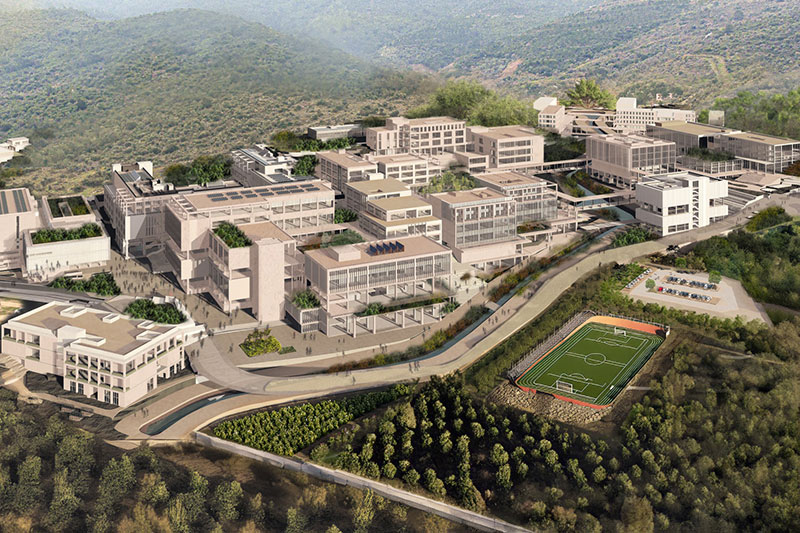
IZMIR UNIVERSITY OF ECONOMICS GÜZELBAHÇE CAMPUS
DetailsGLOBAL CAREER
As Izmir University of Economics transforms into a world-class university, it also raises successful young people with global competence.
More..CONTRIBUTION TO SCIENCE
Izmir University of Economics produces qualified knowledge and competent technologies.
More..VALUING PEOPLE
Izmir University of Economics sees producing social benefit as its reason for existence.
More..
You are one step ahead with your graduate education at Izmir University of Economics.